Hire for what they can do,not how they write a CV
Sift is an AI hiring platform: candidate screening where the AI does the reading and the hiring manager does the deciding. We took the product from name and positioning through web presence and product design: a tool that ranks every applicant by fit, explains the reasoning behind each score, and lets founders focus on interviews, not inboxes.
Brief
Hire on signal, not on luck
Most hiring processes rely on a founder speed-reading a stack of CVs and pattern-matching against a rough mental model of what "good" looks like. Sift formalises that signal: the AI reads every application against the role requirements and returns a ranked list with scores and reasoning, so the decision-maker starts from a shortlist, not a pile. We designed the name, positioning, web presence, and product screens to tell that story end to end.
Positioning
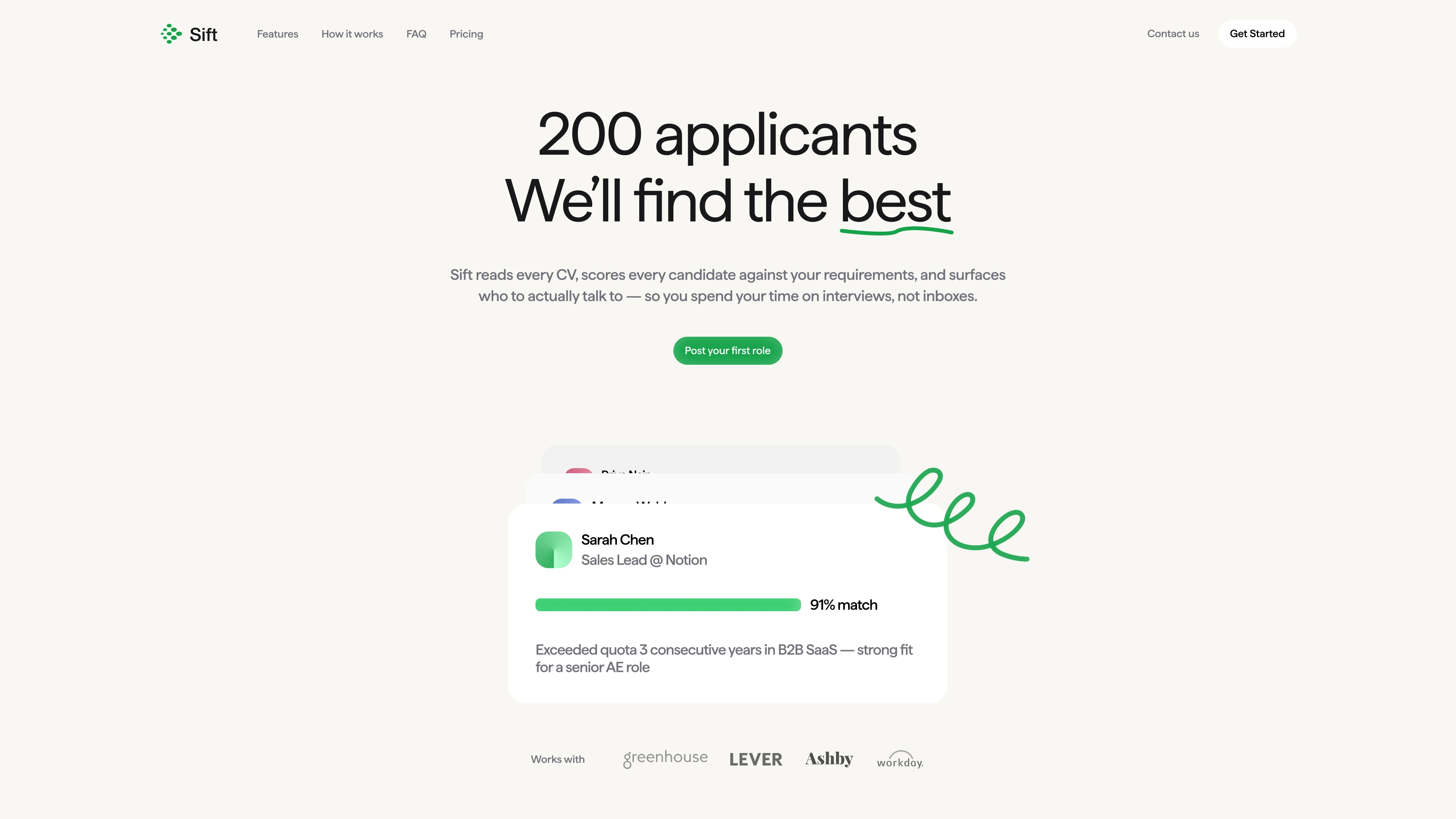
"200 applicants. 3 worth your time. We'll find them."
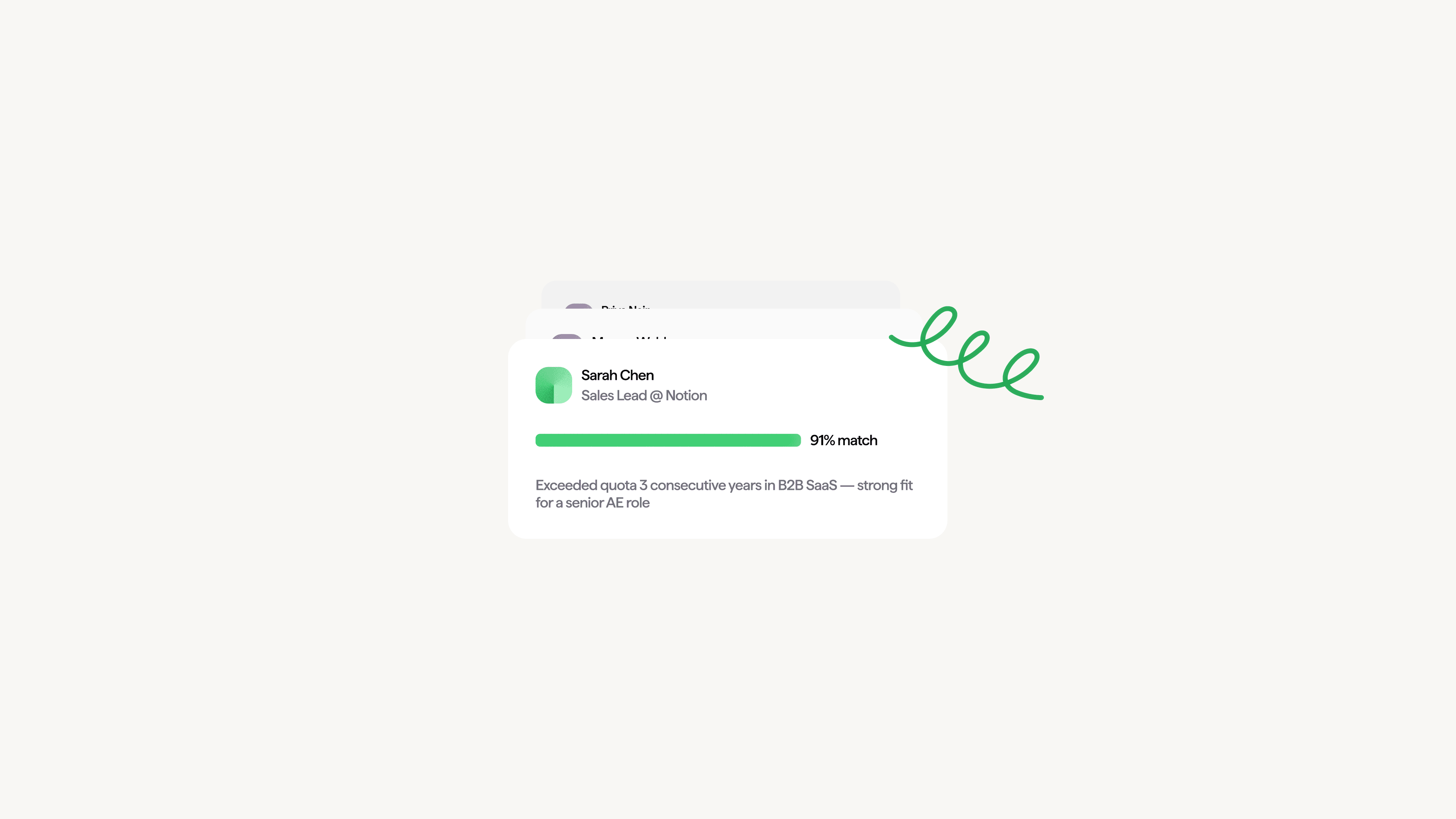
The headline is deliberately specific, because the number makes it real. Every founder who has posted a role and opened their inbox the next morning knows what 200 applicants feels like. Sift's web design leans warm and light, a deliberate contrast with the dark-mode SaaS aesthetic: this product is about people, not pipelines, and the visual tone reflects that. The hero shows three candidate cards with AI match scores visible from the first scroll.
Candidate pipeline
Every applicant scored, ranked, and explained
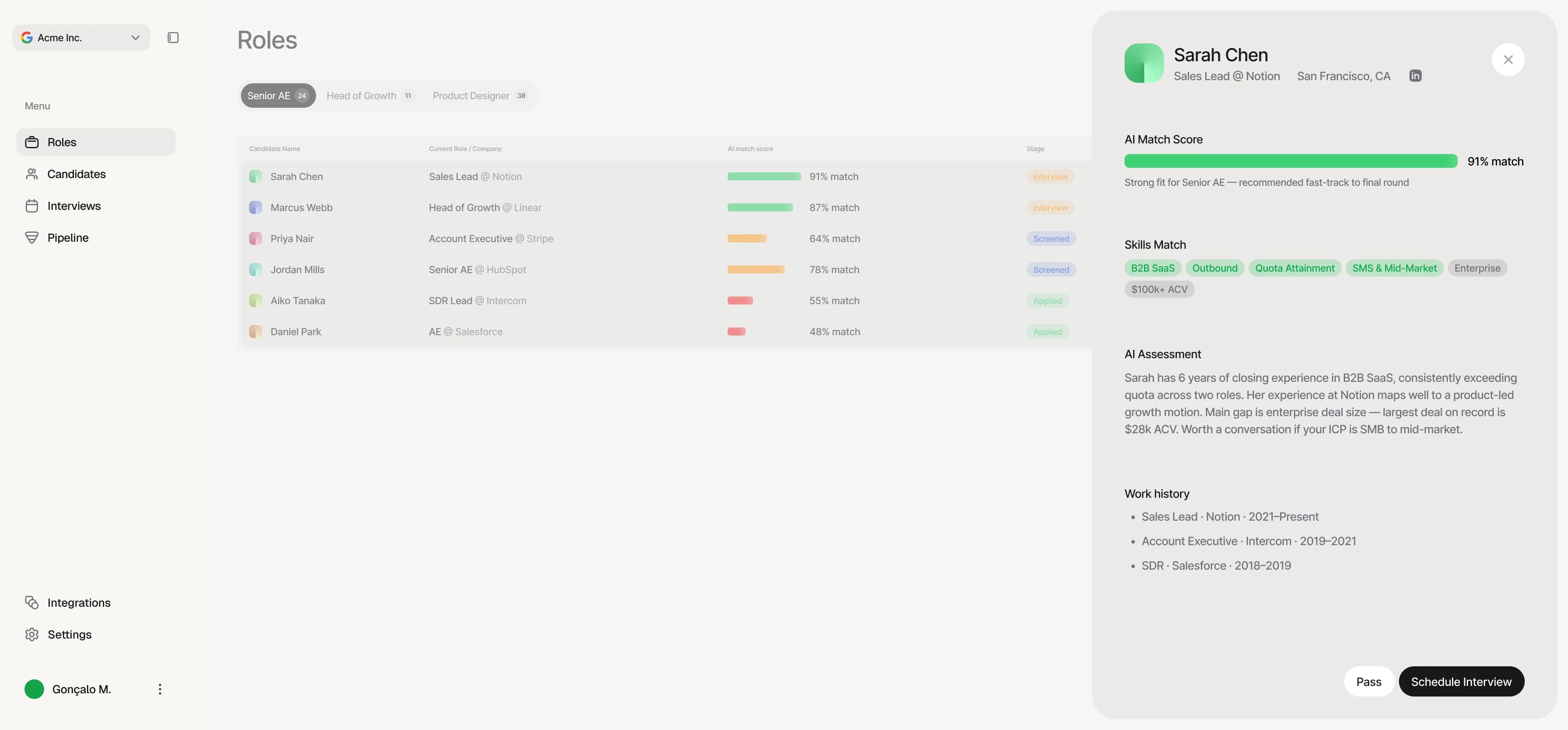
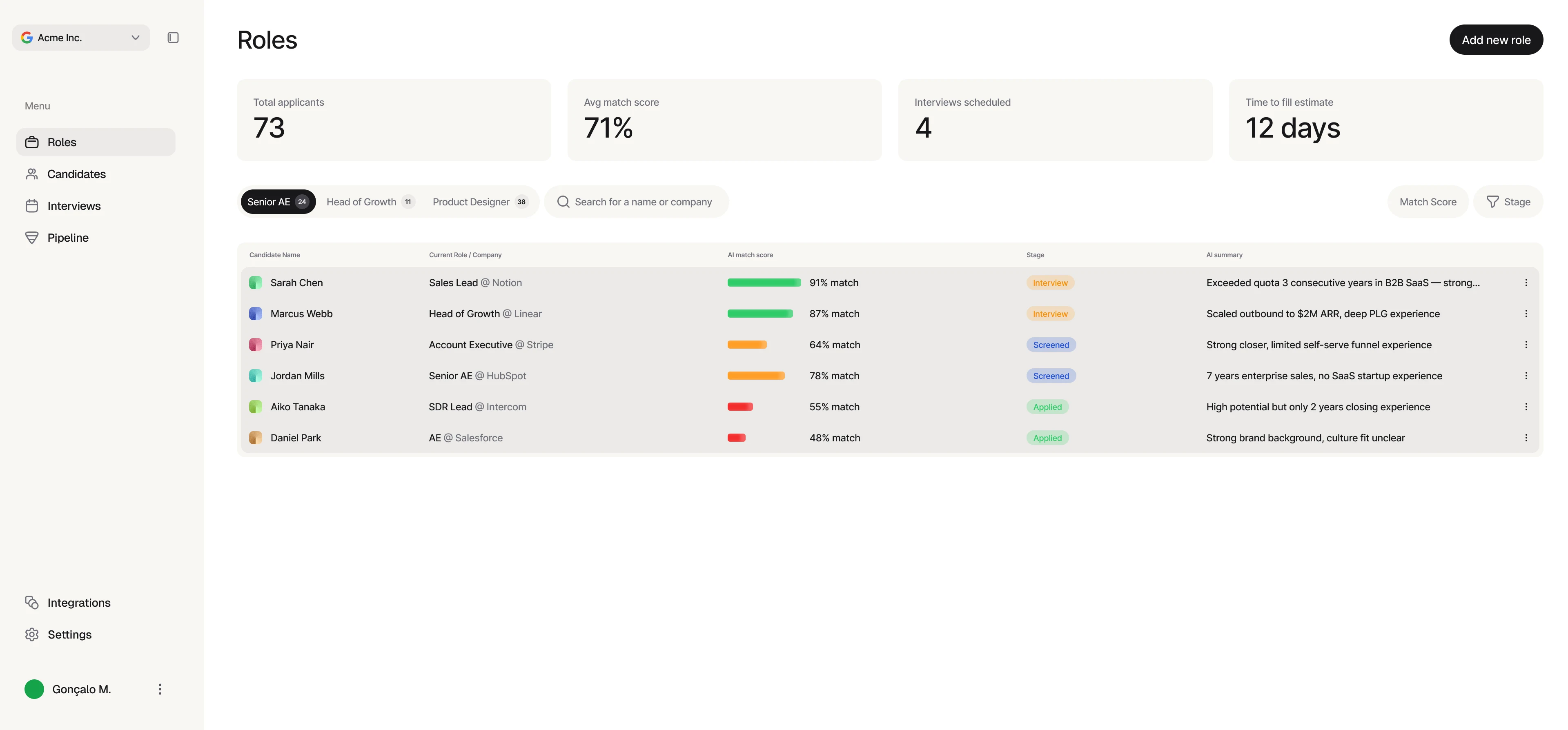
The main dashboard is a ranked candidate list per role, sorted by AI match score descending. Each row shows the candidate's current role, their score as a colour-coded progress bar, their pipeline stage, and a one-line AI summary of fit. Switching between open roles at the top of the screen updates the list instantly. The AI score is the most visually dominant element on the page, because it is the product.
Candidate intelligence
Score, reasoning, and a clear next action
Clicking any candidate opens a right-side panel with the full AI assessment: a match score out of 100, a skills breakdown showing exact matches and gaps against the role, and a plain-English explanation of why the score is what it is. Work history sits below for context. The panel closes with three actions: schedule an interview, pass, or save for later. The hiring decision takes one click, not a discussion.